

In the beginning . . .
(Or how we got here from there)
Back in 2004, my second marriage had just failed, miserably — the end coming one night with most of my clothes strewn across the front yard of our house in Sanford, Florida.
After a few hours of trying to sleep in my pickup truck, I found my way to a cheap, transient motel somewhere on the east side of Orlando. It was a pitiful moment that I’ve done my best to forget.
To make a poker analogy, I was holding a shit hand and didn’t have many options other than to throw my few remaining chips into the center of the table and pray for a miracle.
Sometimes in life, when you need it most, you hit one of the only two cards in the deck — the so-called “two outer” — that allows you to keep playing, at least for a bit.
For me, the lifeline came from my friend, Mark. He and his wonderful future wife let me crash in the spare bedroom of the home they were renting less than a mile from where all three of us worked as reporters at the Orlando Sentinel.
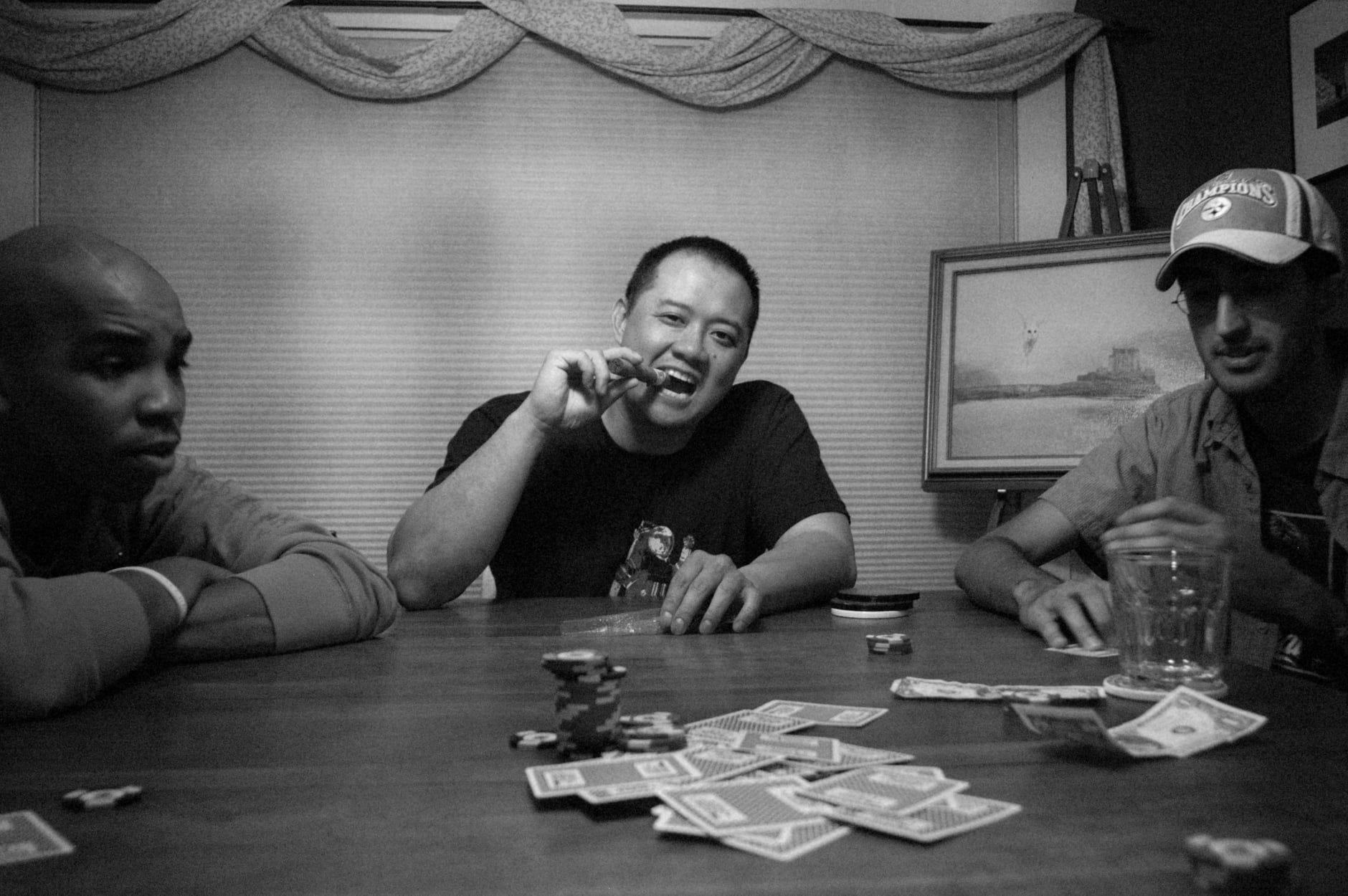
I blame Mark for getting me hooked on poker. I was 36-years-old and the few times I had played poker, it had always been five-card draw with the pots never rising above a few dollars. I had never played nor heard of No-Limit Texas Hold’em, the game that, according to Mark, was all the rage.
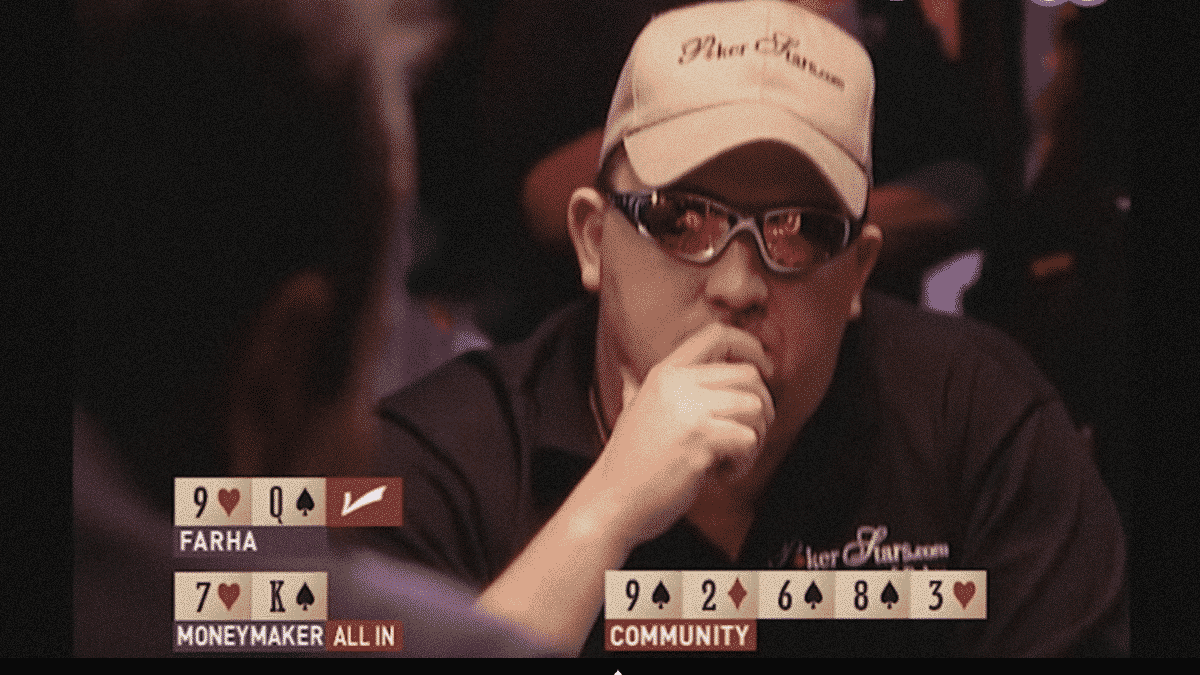
I hadn’t yet heard of Chris Moneymaker, a beer-bellied accountant from Tennessee who a year earlier had parlayed an $86 online satellite tournament into a seat at the 2003 World Series of Poker in Las Vegas. If you’ve played poker for more than a minute, you know that Moneymaker bested a field of 839 players, taking down the $2.5 million first place prize. His win, which was broadcast on ESPN, ignited a poker craze, which may or may not have peaked, but has yet to fade. The aftershocks of the “Moneymaker Effect” still echo in card rooms around the world two decades later.
In the years since I began playing Texas Hold’em, I’ve probably won more than $40,000 from tournaments and cash games. Sadly, I’d be hard pressed to tell you whether, overall, I’m up or down.
I walked away from journalism in 2006 to chase the poker dream, grinding it out on the 10-20 limit tables in Atlantic City. With almost no bankroll, less common sense and an extra helping of overconfidence, I managed to survive 15 months before I accepted the fact that I was out of my depth. A few months later, I landed a job in Washington, D.C. working at a non-profit.
For most of the past 10 years, I’ve relegated poker to monthly home games and the occasional tournament in D.C. or at Maryland Live! Casino, about 45 minutes up the Baltimore-Washington Expressway.
My focus was on a new career, a new marriage, a new house, and by 2015, a new daughter. I didn’t have room in my life for risky diversions.
Yet, recently, I’ve made my way back to the familiar confines of online poker, something I hadn’t done regularly in more than 15 years. Most days, I play several $1 to $3 buy-in tournaments. Meanwhile, I’ve immersed myself in all the free strategy guides and videos I can find on online. I took advantage of a Black Friday sale to join a training site that analyzes my play against AI opponents, offering suggestions on optimal decision-making in different situations.
I’ve even pulled books off the shelf that I haven’t opened in years — Phil Gordon’s The Real Deal and James McManus’ Positively Fifth Street are stacked on my nightstand along with a couple new purchases, Ed Miller’s The Course and Colson Whitehead’s The Noble Hustle. (Sadly, a few years ago, I dropped off a box filled with poker books at Goodwill, thinking that my obsession had passed.)
I’ve also started listening to Card Player magazine’s Poker Stories podcast. In each episode, host Julio Rodriguez sits down with a successful player to uncover their “origin story.” What was their life like before poker? When and how did they start playing? When did they realize that they could turn poker into a career?
Rodriguez peels back fascinating insights from their journeys. But after each episode, I’m left with the same question: “What makes them special?”
I’m not jealous or resentful. Rather, I’m truly curious how they reached the heights of the profession, while countless grinders and recreational players — who come from similar backgrounds with comparable intellect — have not.
What traits do successful pros share? Is there something besides being good at math that put them on this path? Can we measure those qualities in the same way that we can time how fast wide receivers run the 40 yard dash?
The more I thought about it, the more I realized how exploring answers to those questions would make a great book.
Last night, I pitched the idea to my friend Mark, who as fate had it, moved to the D.C. area at about the same time I did and is still grinding away at journalism. More importantly, after all these years, he’s still my go-to poker buddy.
I asked him to join this project as my editor because a) he’ll make it better b) this is going to require a lot of ::::cough cough:::: research.
Every great story has a narrative arc. I don’t know where this one’s headed. As I interview people for the book, I’m sure a few good storylines will emerge.
I’m 96 percent sure, the story is NOT going to reach a denouement where I’m staring down Teddy KGB for my entire bankroll.
As I told Mark, no one gives a fuck about that.
But you know . . . there’s always that two-outer.